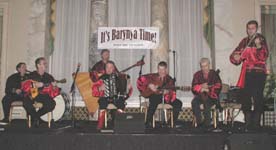
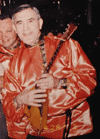
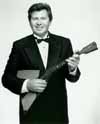
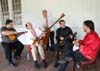
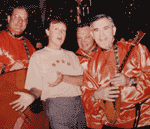
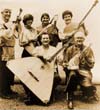
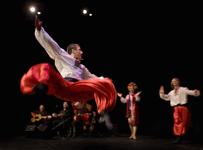
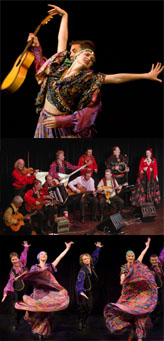
Currently New York based Russian folk music and dance enesemble Barynya
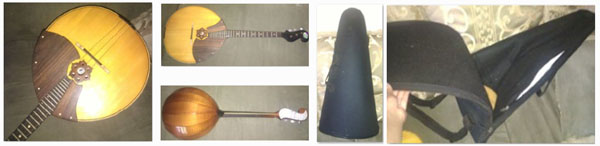
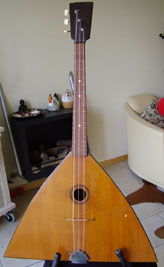
is working on a new balalaika compact disk that will be recorded using the oldest known to us balalaika (made in 1887) with the participation of other Barynya's
musicians and singers.
This balalaika was passed to Mikhail Smirnov, the director of ensemble Barynya,
by its previous owner Will Herzog. This instrument is in a very good condition,
has a great sound.
Please watch our news page for the date of the release of that compact disk.
1. This balalaika was brought over with a Russian immigrant between 1910 and
before WWI. His widow lived in Chicago. Her daughter gave it to
me in 1972. She'd heard that my wife was tired of being kept
awake by balalaika records.
The widow hoped I'd use it rather
than it setting in her attic. I epoxied loose ribs; and started
to play it. Much to my amazement and amusement!
2. The instrument was built for 6 strings. However when I got it, there
were 3 strings all the same size. Either the other strings broke, or
rotted, or were removed, and he had no replacements so used the .011
inch A strings. My wife found a tutor-book for the balalaika.
It showed the E-E-A tuning.
It was hard to play with a loose-loose-tight string feel.
3. I sought out the most reputed instrument man in town, and he
dismissed the instrument as "junk", not worthy of his attention. When
pressed for why this attitude, he said it was the fingerboard was not
ebony; all real instruments are made of ebony. But it was the only
balalaika I had and I'd grown to like it.
4. My old physics formula indicated fifty pounds tension for a .011 inch
"A" string assuming the same fifty pound tensions I calculated that the
"E" strings should be .016 inch.
I found a vendor from the old East Rochester piano works company who had
rolls of music wire; so I restrung the 2 "E" strings with .016 piano
wire. It was now much easier to play. It had a much stronger bass sound.
However, it now had a variation of pitch that was unnerving, and in
tuning would change depending upon how I held the instrument. It was the
neck flexing. I recognized the sound as one I had heard 30 years ago
from my new guitar as I was tuning it just before it exploded. A few
years later I found that the cause was a false assumption by the tutor
book that I knew the right octave. So I was afraid to try 6 strings.
5. Then I met Dave Ludwig (David Ludwik Chrapkiewicz), who said, that everyone he'd seen in his
study-travels didn't use a pick, and used nylon guitar strings. I tried
the nylon "E" strings. Yes, they were easier to play and sounded less
harsh, and didn't stress the neck to cause the frightening sound. A few
years later I found there were affectionados of this sound, who called
it tremello. I still am uneasy when I hear it.
6. The sound board and the fret board are on the same plane. There isn't
the usual two degree bend. Hence it's hard to play without scratching
the soundboard, and no room for a fingerboard. (David Ludwik Chrapkiewicz) taught me
that I shouldn't use a pick so the sound was better and the soundboard
would live longer.
7. I found that it hurt my fingers to press hard for the high notes, so
I cut the bridge down one sixteenth of an inch. I have never found the
right bridge height. It has a different, more lively, mellow sound than
other balalaikas. It's not as loud because of the lowered bridge and no 2-degree-bend.
The frets must be unusually high, because I added adhesive tape scale/note markers, but
they caused no problem playing!
8. In 1979 I went on a BDAA tour of the Moscow museum and was
unimpressed, because their oldest one looked newer than mine, but had 3
strings only. I got confused.
9.
At the Atlanta convention, I brought the instrument and showed it to
the two Russian guests, who immediately and unequivocally said it was
1887 within a couple of years and of the type very commonly sold in
shops everywhere. Not a big surprise to them!
10. I then learned from Bibbs Eckel's history talks that it was about
1888 when Andreyev started his reformed designs, so I got excited about
having a pre-Andreyev balalaika!
11. Jim Flynn says he has a 1927 Zimmerman catalog that has a picture
similar to this balalaika. It has been a fun learning experience, and a
gift that has changed my life. My quest continues. Have I desecrated a
piece of history that belongs in a museum? I wonder if my heirs will
sell it for twenty dollars at a garage sale or will it go on to change
someone elses life?
Will Herzog
BDAA NEWSLETTER
April 10, 1989
Балалайка 1887 года
В настоящее время Русский фольклорный ансамбль музыка и танца Барыня из Нью-Йорка
работает над новым компактным диском, который будет записан на балалайке, изготовленной приблизительно в 1887 году.
Эта балалайка была передана Михаилу Смирнову её предыдущим владельцем, Виллом Херзог.
Инструмент в приличном состоянии и неплохо звучит.
Чтобы послушать звучание этой старинной балалайки,
следите за новостями.
Историю старинной балалайки рассказывает Вилл Херзог.
(Перевод на русский - м.смирнов)
1. Эту балалайку привёз в Америку иммигрант из России примерно между 1910 годом и началом первой мировой войны.
После его смерти балалайка оказалась у его дочки в Чикаго. Она и передала мне инструмент в 1972 году, так как сочла,
что лучше на старинной балалайке кто-то будет играть, чем ей просто висеть на веранде.
Также она знала, как надоело моей жене слушать и просыпаться под бесконечные записи балалаешной музыки на пластинках.
Я склеил разбитые "ребра" балалайки и принялся учиться на ней играть.
2. Инструмент имел колки для шести струн, однако когда он оказался у меня,
на нем было всего три струны одинаковой толщины.
То ли остальные струны порвались, то ли заржавели,
или их просто сняли и нечем было заменить.
Были использованы три одинаковых струны "ЛЯ" толщиной по .011 дюйма.
Моя жена нашла книгу-самоучитель игры на балалайке.
Там было написано как правильно настраивать инструмент: МИ-МИ-ЛЯ.
Было очень неудобно играть с двумя сильно спущенными и одной сильно натянутой струнами.
3. Тогда я нашел самого лучшего мастера по музыкальным инструментам в своем городе.
Он посмотрел и сказал, что балалайка эта нехороша и не стоит его внимания и времени с ней возиться.
Дескать, нет черной подкладки там, куда бьют пальцы правой руки после удара по струнам,
а на всех стоящих инструментах такая подкладка есть.
Но это была моя единственная балалайка, и со временем мне она нравилась всё больше и больше.
4. Моя старая физическая формула показывала 50 фунтов натяжения для струны ЛЯ .011 дюймовой толщины.
Я подсчитал, что для струны МИ при сохранении той же натяжки толщина будет равно .016 дюйма.
Тогда я отыскал поставщика струн для пианино из старого Восточного Рочестера у кого было несколько подходящих мотков.
Я перетянул две струны "МИ", используя фортепианные струны .016 диаметра.
Играть стало намного легче и бас зазвучал получше.
Однако появился какой-то неприятный для меня призвук и вдобавок
инструмент раастраивался в зависимости от того,
как я его держал. Плавал гриф. Я узнал знакомый звук.
Я уже слышал нечто подобное 30 лет назад от своей новой гитары,
когда настаивал её в аккурат перед тем, как она лопнула.
Спустя несколько лет я узнал, что я перетягивал струны (настраивал слишком высоко).
Я боялся натянуть все шесть струн и оставил всего три.
5. Потом я встретил Дейва Людвига. Он сказал, что никто не играет на балалайке медиатором и
можно использовать нейлоновые струны от гитары.
Я попробовал гитарную струну "МИ" из нейлона. Действительно,
играть стало полегче, и звук стал помягче. Ушло напряжение с грифа, которое и вызывало пугающий звук.
Спустя несколько лет я узнал, что есть и любители подобного звучание и даже существует для него специальное
название "tremello". Но мне до сих пор это неприятно слышать.
6. The sound board and the fret board are on the same plane. Нет обычного наклона в два градуса.
Из-за этого трудно играть не царапая звуковую панель и нет места для fingerboard.
Dave Ludwig (David Ludwik Chrapkiewicz) подсказал мне не играть медиатором,
чтобы звук был лучше и продлилась жизнь для soundboard.
7. У меня болели пальцы, если сильно нажимать для высоких нот, поэтому я подрезал подставку на 1/16 дюйма.
Мне никогда не удалось найти правильную высоту для неё. Получился живой, более нежный звук, чем у
других балалаек, не такой громкий из-за низкой подставки
и отсутствия наклона в два градуса. Когда учился играть, я сделал наклейки из пластыря с обозначениями
нот, но они не создают проблем при игре.
8. В 1979 я поехал с BDAA в московский музей и был немного удивлен, что
самые старые балалайки выглядели новее моей, но у всех было всего три струны.
I got confused.
9.
На съезде балалаешников в Атланте я показал балалайку двум гостям из России, которые сразу же
определили возраст - 1887 плюс-минус два года.
В то время, объяснили они, такие балалайки продавались в лавках повсеместно.
Вообщем, особо не удивились...
10.
Из лекций Бибса Эккеля по истории балалайки я узнал, что примерно в 1888 году Андреев
начал свою балалаешную реформу (дизайна инструмента).
Я порадовался, что у меня есть пре-Андреевская балалайка!
11. Джим Флин сказал, что у него есть каталог Зиммермана 1927 года, где есть картинки балалаек, похожих на мою.
Это было очень интересно и эта балалайка изменила мою жизнь.
Я продолжаю исследавать этот вопрос. Может у меня находится балалайка, которой место в мезее?
Я могу предположить, что может быть мои наследники когда-то продадут эту балалайку на распродаже за двадцатку
или она снова изменит чью-то жизнь?
Вил Херзог
Листовка Ассоциации Балалайки и Домры Америки
10 Апреля, 1989
Письмо посетителя вебсайта Ключникова Сергея, аспиранта МГГУ им.М.А.Шолохова
Здравствуйте, Михаил!
Позволю себе поделиться некоторыми замечаниями, касающимися интересного инструмента 1887 года, обнаруженного на Вашей интернет-страничке.
Прежде всего, представлюсь: Ключников Сергей, аспирант МГГУ им.М.А.Шолохова. Занимаюсь исследованием бытования балалайки в простонародной деревенской среде и, соответственно, крестьянской инструментальной музыкой.
Надо Вам сказать, Михаил, что я был искренне обрадован, разглядев на Вашем сайте такой славный инструмент. В нынешние времена не так часто приходится встречать спокойные незатейливые балалайки. В этой незатейливости и простоте много подлинного чувства.
Начну с того, что я внимательно рассмотрел сам инструмент и прочитал заметку прежнего владельца, г-на Вилла Херзог. Как мне кажется, здесь следует сделать некоторые пояснения к тексту, исправить некоторые, так скажем, неточности. Первое, на что обращаю внимание - датировка инструмента и выводы, которые в связи с этим делает автор.
В заглавие самой статьи вынесена дата 1887 год и при этом в тексте говорится о якобы "доандреевской" балалайке. Это не совсем верно, а точнее - в корне своём не верно. Подобные балалайки уже своим обликом несут явный отпечаток видоизменений инструмента, внесённых В.В.Андреевым. Об этом свидетельствует "стандартизированная" форма инструмента: явно выверенная пропорциональность в соотношении размеров кузова, грифа, головки грифа, а также, что наиболее значимо, шестнадцатиладовый укороченный гриф.
Межладовые расстояния, да и собственно количество ладов выверены самим В.В.Андреевым совместно с мастерами В.В.Ивановым, Ф.С.Пасербским и, позже, С.И.Налимовым. Напомню, что первый образец балалайки, скопированный в 1885 году по заказу В.В.Андреева с деревенского инструмента, имел всего пять ладов. Два года спустя появилась семиладовая балалайка (как тогда говорили: "семивзводная" балалайка). И только в 1888 году был изготовлен двенадцатиладовый инструмент! А трёхструнная балалайка с шестнадцатью (и более) ладами появился не ранее 1895 года, уже после встречи В.В.Андреева и С.Н.Налимова.
Увеличение, дробление и, соответственно, принцип раскладки ладов был скопирован с европейских инструментов (мандолина), чего, к слову сказать, не скрывал и сам В.В.Андреев. По-сути, им была сделана попытка трансформации национального музыкального сознания в сторону привычной европейской нотной системы. Балалайка из природной пентатоники перешла в хроматику. Вся академическая "народная" музыка - она не совсем русская, она общеевропейская. Русская музыка для балалайки (как и для гуслей, скрипки, гармоники и др.) сохранилась на сегодняшний день только в деревнях, в среде земледельческого населения. Причём играют там всё в той же самой "доандреевской" пентатонике!
Думается, что в свете вышеизложенного никак не представляется возможным называть Ваш инструмент "доандреевским" (тем более что уже в 1887 году началась деятельность Великорусского оркестра со сложившимися хроматическими двенадцатиладовыми моделями балалаек). Коротко: это балалайка петербургского мастера конца второй половины 90-х годов 19 века. Возможно и так, что это балалайка мастера, изготовившего первую андреевскую пятиладовку - В.В.Иванова. После успехов Великорусского оркестра он вновь стал делать балалайки и, как говорят, небезуспешно.
Второе моё замечание будет касаться струн и способа настройки балалайки. Перед нами шестиструнный инструмент, он изначально создавался таким каков есть. Подобная традиция жива и в наши дни в некоторых губерниях России. До сих пор кое-где сохранилась традиция игры исключительно на шестиструнных инструментах. Причём балалайку деревенские музыканты самостоятельно переделывают из трёхструнной на шестиструнную (например, Курская, Воронежская, Липецкая обл. и др.). Струны на подобные инструменты ставят исключительно (!) металлические, тонкого сечения. Часто вынимают тонкие сталистые жгутики из электропроводов и используют как струны - получается потрясающий разливистый звук, сочный, слышный по всей деревне. Здесь хочу заметить, что ни в одной области, ни один музыкант осознанно не использовал синтетические нейлоновые струны.
Несколько слов касаемых способа настройки балалайки. В деревне никто и никогда не строил инструмент специально по "ми-ми-ля". Балалайка строится, прежде всего, под голос, под песню, чтобы удобнее было петь. Да и самих способов настройки, по разным данным, существует не менее двух десятков. Самые распространённых - три: русский (гитарный, деревенский), балалаечный, минорный (манорный). Для каждого строя существует своя традиция, свои наигрыши, в каждом своя убедительная красота и - правда.
Famous Russian balalaika virtuoso Alex Siniavski have released an online version of his best selling The Balalaika Tutorial DVD. You can get it at his website www.iBalalaika.com. Below you can see two samples - short intro into the course, and lesson 6 - tremolo.
1. Introduction 2. Tuning 3. Strumming 4. Thumb Pizzicato 5. Pizzicato Vibrato 6. Double Pizzicato 7. Single Pizzicato 8. Tremolo 9. The Rolls 10. Left Hand Position 11. Learning a Song 12. Scales 13. Basic Chords 14. The Folk Balalaika
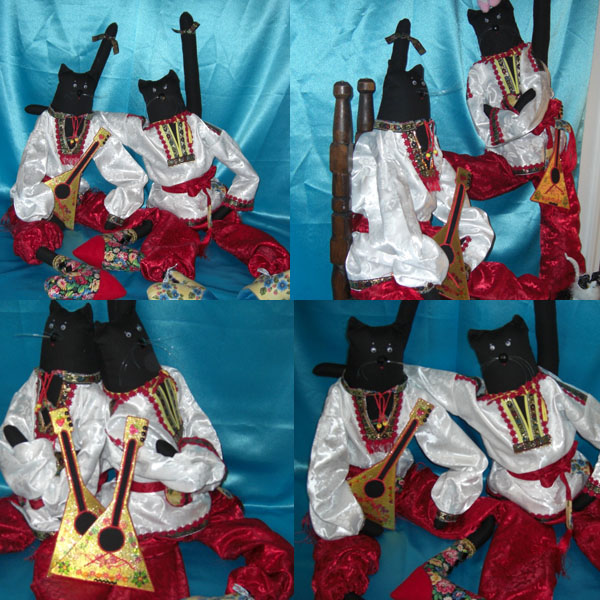
Black cats dressed in Russian folk costumes with balalaikas
Russian folk costume designer Svetlana Gavrilova has made a set of black cats dressed in Russian costumes with balalaikas. To view all photos you may need to join Balalaika Group on Google Network.
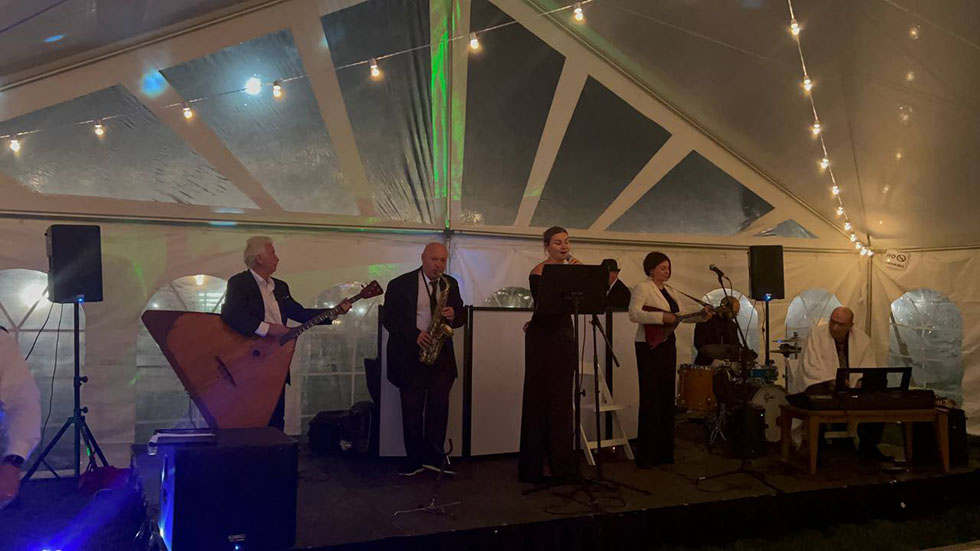
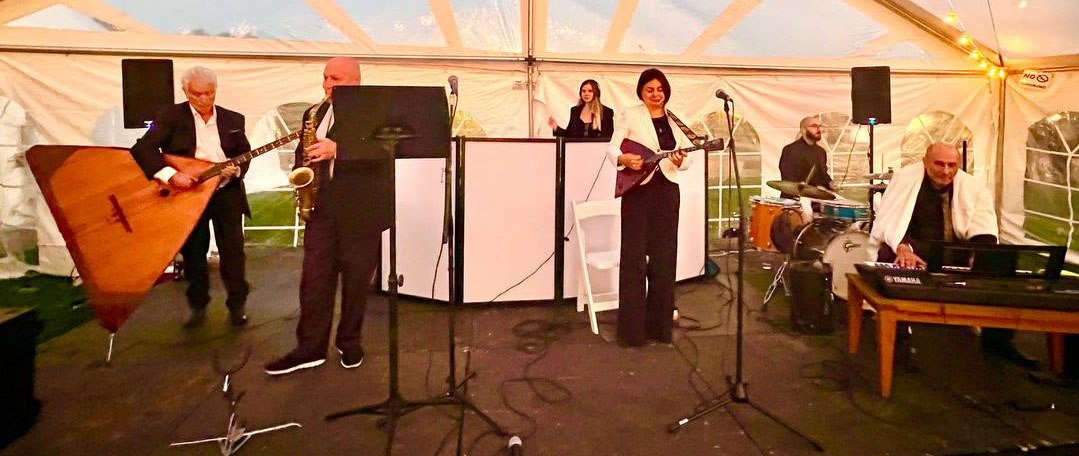
Live Music Balalaika Band - Wedding Tasting Room & Taphouse at Mount Ida Reserve - in Scottsville, Virginia - October 8, 2022
DJ Alisa, bilingual MC-Tamada Mikhail and eight piece live music band provided music and entertainment for mixed Russian-Jewish-American wedding reception in Scottsville, Virginia on Saturday, October 8th, 2022. For their venue newlyweds selected Tasting Room & Taphouse at Mount Ida Reserve, 5600 Moonlight Dr, Scottsville, VA 24590.
Alex Siniavski balalaika and Gypsy guitar virtuoso from Philadelphia, Pennsylvania.
New York Balalaika Orchestra performs at Russian Orthodox weddings, fundraising balls, large scale social events, Doctor Zhivago's style corporate parties.
Russian Balalaika Duo: Alex Siniavski and Mikhail Smirnov with program of Russian, Ukrainian, Gypsy, Cossack, Klezmer, and international music and songs performed on balalaika, garmoshka and guitars. New York, New Jersey, Pennsylvania.
Chicago Cossacks - Russian music and song ensemble from Illinois.
Brooklyn Balalaikas - Russian Folk Music Trio from Brooklyn, New York. Artistic Director Leonid Bruk.
New York Russian folk music band specialty is Russian folk music and songs. All band members are top professional musicians. Choice of Gypsy, Ukrainian, Russian (2 different sets) and Cossack costumes. Extended repertoire. Formal concert, background music or music for dancing party. Our main instruments are balalaika, domra, drums, garmoshka (Russian button accordion), Gypsy guitar, classic guitar, contrabass balalaika, cello and vocals.
Old Red Wine - Klezmer, Yiddish, Russian dixieland band from Brooklyn, New York. Artistic Director Shlomo Leiderman.