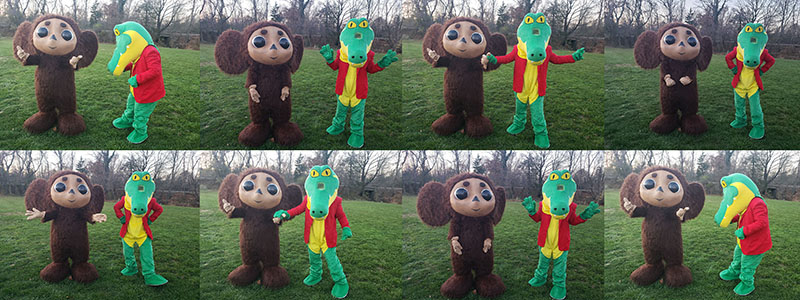
Cheburashka, Krokodil Gena for hire, Чебурашка и Крокодил Гена, Costumed characters, Mascot costumes, kids party entertainment in New York, New Jersey, Connecticut, Pennsylvania
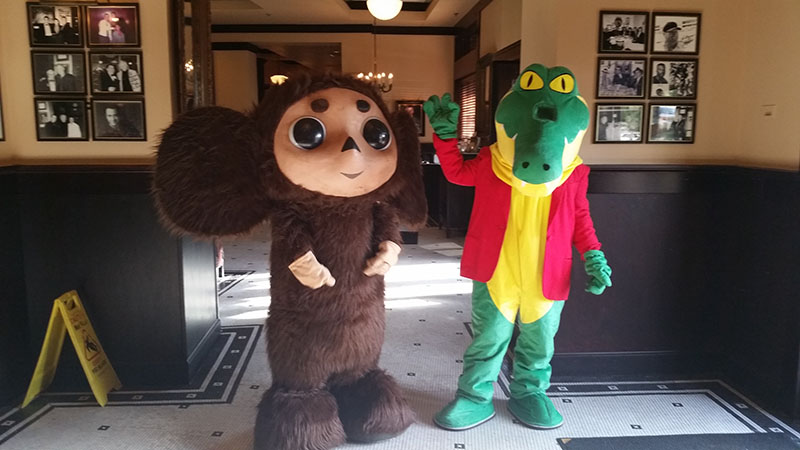
Popular Russian characters Cheburashka and Krokodil Gena (Russian: Чебурашка и Крокодил Гена) are available for hire in New York City, Connecticut, New Jersey, Pennsylvania, Virginia and other states for kids and adults party entertainment, Grand openings, Festivals, etc.
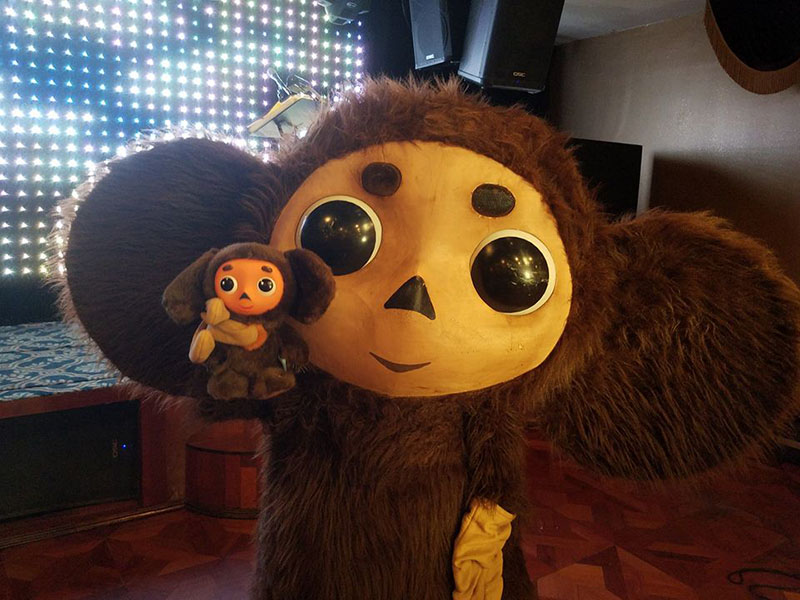
"Cheburashka" is a small brown-haired animal famous for his huge ears and big eyes. He is an entirely fictitious character from a 1965 children’s book by Russian writer Eduard Uspensky. In 1969 Cheburashka played the main part in very popular Russian cartoon by Soyuz-Mult-Film, Soviet Union’s major animated film studio.
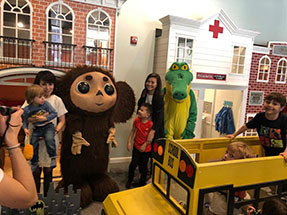
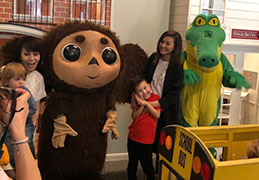
03-29-2026. Green Square - Kids Movement Lab, New York City
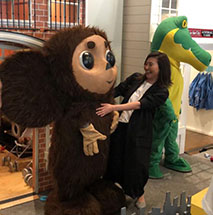
Clown Alisa, Cheburashka, and Krokodil Gena entertained children and adults at a children’s birthday party on Sunday, March 29, 2026. All the guests gathered right in the center of New York City in a cozy venue for children’s development, sports, and entertainment — Green Square Kids Movement Lab (www.greensquareplay.com), located on the corner of 8th Avenue and West 56th Street in Manhattan. The entertainment program included active games, dancing, songs, a photo session, and gifts.
04-25-2025. Smith Middle School, Glastonbury, Connecticut
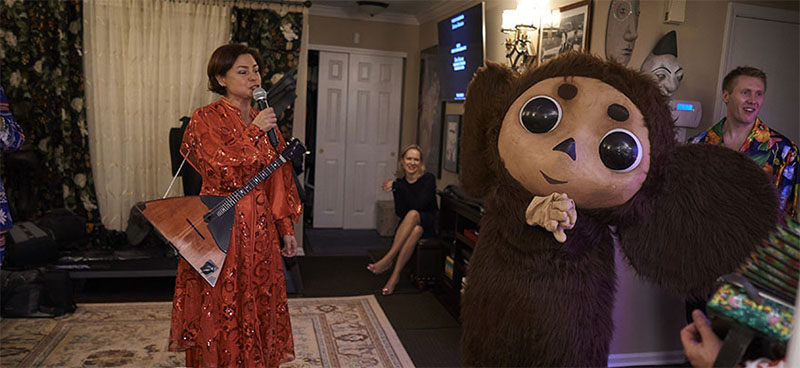
Cheburashka, and other dancers and musicians of ensemble Barynya performed during an International Night event "Kaleidoscope of Languages and Cultures" at the Smith Middle School in Glastonbury, Connecticut on Thursday, April 24th, 2025.
Cheburashka, Krokodil Gena, Elza performed for about an hour during kid's birthday party in New York City's Hells Kitchen neighborhood on Sunday, March 30th, 2025.
08-10-2024. Kid's party in Philadelphia, Pennsylvania
Cheburashka and Krokodil Gena performed during kid's party on Saturday, August 10th, 2024 at the Lanjeron Restaurant in Philadelphia, Pennsylvania. One hour interactive program with games, fun, and photo session was provided by musicians and dancers of ensemble Barynya, and live trained chicken named Karamel'ka. Exact address of the venue: Lanjeron, 13032 Bustleton Avenue, Philadelphia, Pennsylvania 19116.
03-01-2024. Nightingale Bamford School, New York City
Cheburashka, Krokodil Gena, dancers, and musicians of ensemble Barynya performed for students and adults during an event at the Nightingale Bamford School, 20 East 92nd Street, New York, NY 10128 (New York City) on March 1, 2024. Чебурашка и крокодил Гена развлекали детей на ярмарке в школе в Манхаттане 1-ого марта 2024-ого года.
11-23-2022. Hidden Spring Lavender & Alpaca Farm in Skillman, Somerset County, NJ
Cheburashka and Krokodil Gena attended kid's party in New Jersey on Wednesday, November 23rd, 2022. This private event took place at the Hidden Spring Lavender & Alpaca Farm, 890 Belle Mead-Blawenburg Rd, Skillman, NJ 08558. (Somerset County, New Jersey). 1 hour program of entertainment included interactive games, music, songs, and dances. Music was performed live on garmoshka and balalaika. Роли Чебурашки и Крокодила Гены исполнили артисты ансамбля "БАРЫНЯ".
04-13-2019. Hudson's House of Play, West New York, New Jersey
Cheburashka and Krokodil Gena enterained kids during birthday party at the Hudson's House of Play West New York, New Jersey (Hudson County) on Saturday, April 13th, 2019. Exact address of the venue: 40 Riverwalk Plaza, West New York, New Jersey 07093.
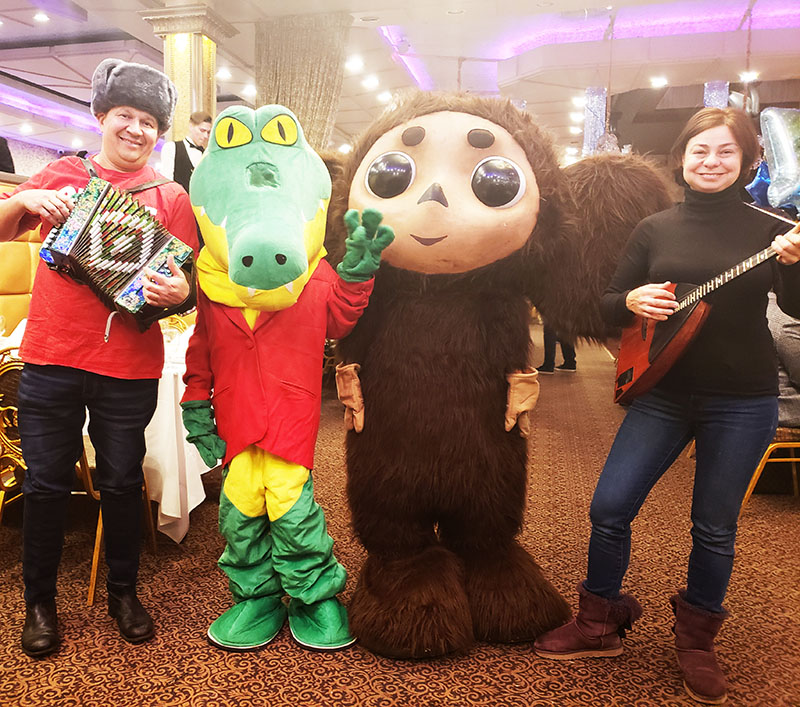
02-02-2019. Restaurant Chinar in Brooklyn, New York
On Saturday, February 2nd, 2019 around 8pm Cheburachka, Krokodil Gena, garmoshka player Mikhail Smirnov, balalaika player Elina Karokhina performed during Russian birthday party at the Restaurant Chinar in Brooklyn. Exact address of the venue: Chinar Restaurant & Special Events, 2775 Coney Island Ave, Brooklyn, NY 11235. Крокодил Гена, Чебурашка, музыканты ансамбля Барыня Михаил Смирнов (гармошка) и Элина Карохина (балалайка) встречали гостей на большом юбилее в ресторане Чинар на Кони-Айленд авеню в Бруклине.
12-08-2018. Birthday party in Jamison, PA (Bucks County, Pennsylvania)
On Saturday, December 8th, 2018 Cheburachka, Russian garmoshka player Mikhail Smirnov, balalaika virtuoso Elina Karokhina and folk dancer Vladimir Nikitin performed during Russian birthday party that was taking place at private house in Jamison, PA (Bucks County, Pennsylvania). Чебурашка, танцоры Алиса и Володя, а также музыканты ансамбля Барыня Михаил и Лина развлекали именинника и его гостей на небольшом эксклюзивном юбилее в частном доме, расположенном в Бакс-Каунти, административном округе штата Пенсильвания.
10-16-2016. Kabaret Restaurant in Spotswood, New Jersey
Cheburashka and Krokodil Gena provided one hour program that included photo session, games and fun during Elon's 1st Birthday party at the KabaretRestaurant, 100 Summerhill Road, Spotswood, NJ 08884 on Sunday, October 16th, 2016.
09-20-2016. Clement Clarke Moore Park, New York City
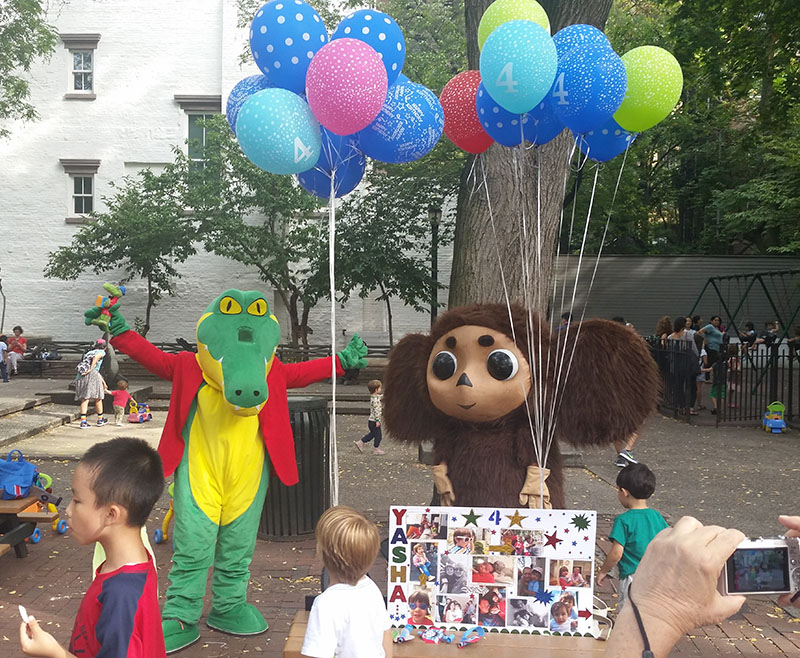
Cheburashka and Gena The Crocodile performed one hour program for kids and adults during 4th birthday party at the New York City's Clement Clarke Moore Park located at 195 10th Avenue, New York, NY 10011 on the corner of 10th Avenue and 20th Street. The performance took place after all schools were closed for the day (approx between 3:30 and 4:30PM) on Tuesday, September 20th, 2016. First "Cheburashka" and "Krokodil Gena" took lots of pictures with kids and adults. After photo session "Cheburashka" and "Krokodil Gena" played several intaractive games with kids.
09-16-2016. Maggiano's Little Italy, Hackensack, NJ
"Cheburashka" and "Krokodil Gena" performed one hour show for kids and adults at the Maggiano's Little Italy, 70 Riverside Square, Hackensack, NJ. The performance took place from 5pm to 6pm on Friday, September 16th, 2016. In the beginning "Cheburashka" and "Krokodil Gena" were waiting at the door of the restaurant to meet the guests. When kids and adults arrived they were surprised and very happy to see Cheburashka and Krokodil Gena. Later, inside of the restaurant, Cheburashka and Krokodil Gena posed for photos and played several games with kids.
08-13-2015, Captain Mas Seafood Crab House, Sterling, Virginia
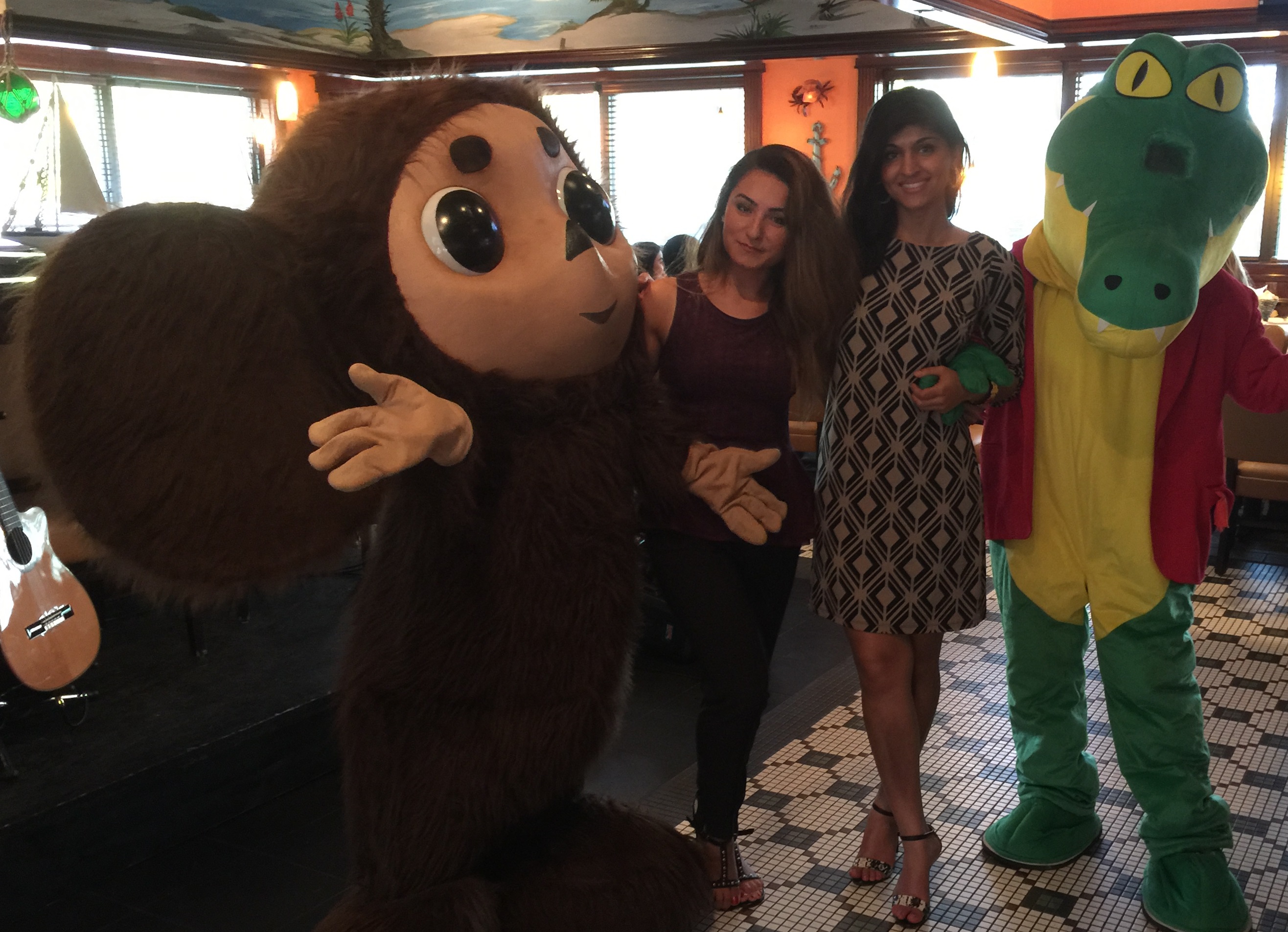
Cheburashka and Krokodil Gena showed up at the Anniversary Party of Aria Medical Spa in Virginia. The event took place at the Captain Mas Seafood Crab House located in Cascades Marketplace, 46303 McClellan Way, Sterling, VA 20165. Cheburashka and Krokodil Gena wished Happy Birthday to the owners and employees of the company and posed for photos.
06-13-2015. Grand Opening "Netcost Market" in Philadelphia, Pennsylvania
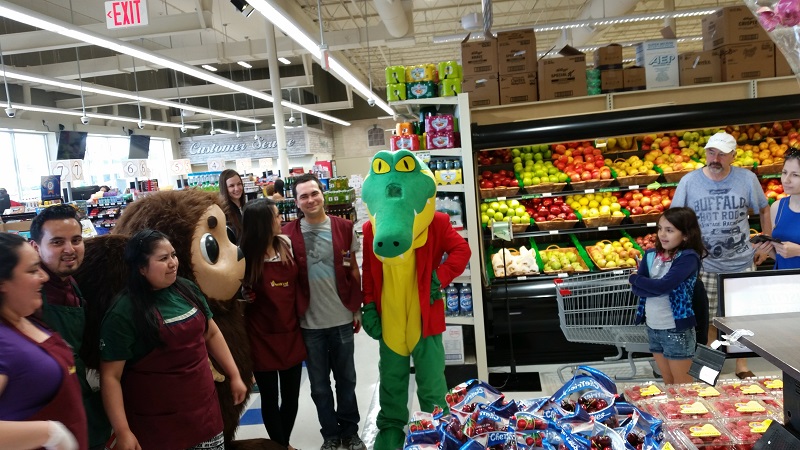
Cheburashka and Gena the Crocodile provided one hour performance at the Grand Opening of huge Russian grocery store "Netcost Market" in Philadelphia on Saturday, June 13th, 2015. Exact address: NetCost Market, 2417 Welsh Road, Philadelphia, PA 19114.
01-19-2014, Kid's Place for Birthdays on Coney Island in Brooklyn, New York
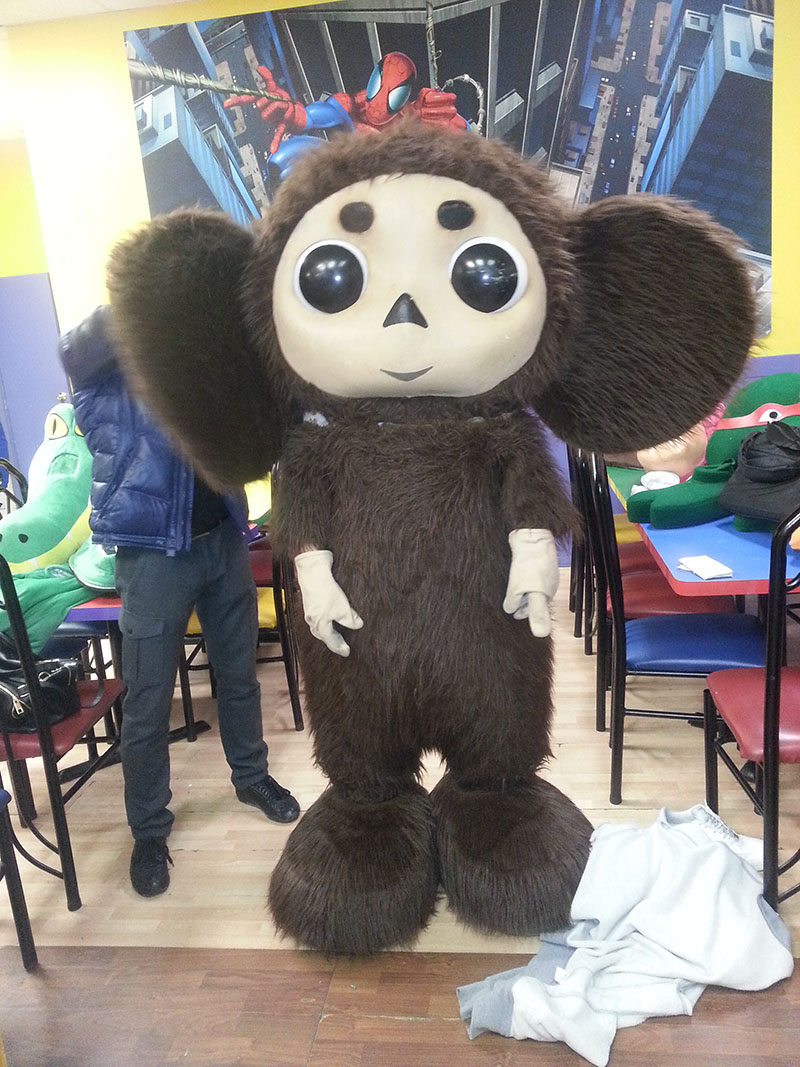
On sunny but cold day of Sunday, January 19th, 2014 two musicians of New York based Russian dance and music ensemble ensemble Barynya Mikhail Smirnov and Elina Karokhina were just on time to save Cheburashka who was in big trouble just like in the story... Cheburashka and his big friend Gena the Crocodile were discovered at GOING OUT OF BUSINESS - EVERYTHING MUST GO!!! sale event at the Kid's Place for Birthdays on Coney Island Avenue in Brooklyn, New York. Owners of the establishment were selling all their costumes and equipment. Lucky enough Mikhail and Elina (with help of Sasha Rudoy who pointed out the situation) were able to help Cheburashka and Gena find new home. В воскресенье 19-ого января 2014-ого года было солнечно, но по-зимнему холодно. Музыканты ансамбля Барыня Михаил Смирнов и Элина Карохина получили от танцора и хореографа Саши Рудого важную информацию, что на Кони-Айленд Авеню в Бруклине выходит из бизнеса популярное когда-то место, где проводили детские дни рождения русские жители Бруклина. На грандиозной распродаже были обнаружены грустные Чебурашка со своим приятелем Крокодилом Геной. Наличных как раз впритык еле-еле хватило, чтобы забрать обоих. Так благодаря Михаилу, Элине и всезнающему Саше Р., Чебурашка и Гена нашли себе новый дом.